The future of immunizations could admit “ self - boosting ” vaccines if an exciting new study from the Massachusetts Institute of Technology ( MIT ) is anything to go by . The team is developing microparticles that slowly break down to release doses of vaccinum on a timed schedule – theoretically , that signify beget all the doses of a vaccine in just one shot .
oodles of vaccine need multiple dosage to reach their acme of effectiveness . For theMMR , againstmeasles , epidemic parotitis , and rubella , it ’s two doses , usually given when a child is around 1 and then around 3 years old . For polio , therecommendation in the USis that youngster get four doses , at 2 months , 4 months , 6 - 18 calendar month , and 4 - 6 years of age .
If you live in a place with consistent admittance to health care deftness , scheduling all these vaccinum appointments is at risky an worriment . But for mass in rural , knockout - to - give communities , or area without hearty health infrastructure , this poses a potentially deadly problem .
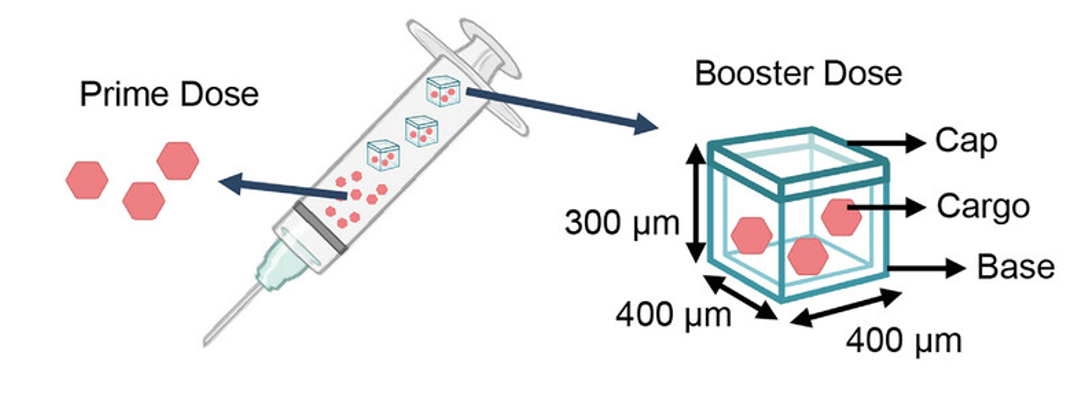
The initial vaccine will contain both the prime dose of the vaccine, plus booster doses contained within microparticles. Over time, the microparticles break down to release the booster dose several weeks later.Image credit: Zhang et al., Advanced Materials, 2025 (CC BY 4.0); cropped by IFLScience
An estimated1.5 million child deathsare due to vaccine - preventable unwellness each twelvemonth , andone in five childrenlack access to vaccines . Finding agency to maximise the impact of vaccinum and get rid of the need for booster could make a substantial nick in these statistics .
“ The prospicient - term goal of this work is to develop vaccinum that make immunisation more accessible – especially for minor living in sphere where it ’s unmanageable to get hold of health care facilities , ” said written report author Ana Jaklenec in astatement . “ This includes rural regions of the United States as well as parts of the developing world where substructure and aesculapian clinic are special . ”
To that terminal , Jaklenec and co-worker Robert Langer have been leading inquiry into a raw eccentric of vaccine delivery system – polymer microparticles that can carry a vaccine dose as their freight and break down slow within the body , deliver their relay transmitter dose several hebdomad after the initial one .
They ’ve already evidence that theirtheory worksby testing a polymer microparticle vaccine for polio , which liberate a booster dose 25 days after the initial dose . But there was a rent – the polymer they used release acids as it breaks down , risking damage to the vaccine contained within the corpuscle .
For this study – led by recent PhD alum Linzixuan ( Rhoda ) Zhang – they decided to concentre on different polymer call polyanhydrides . These are already in usance in some aesculapian products , and there ’s been a lot of enquiry devote to understanding how they behave . significantly , they do n’t have this same issue with acid release .
The squad construct and tested 23 unlike polymers with dissimilar chemical structures . They had to be stable at up to 40 ° C ( 104 ° F ) , slightly above body temperature , and withstand the process of constructing the sealed microparticles that can hold a vaccinum dose .
The vaccinum pick out for examination was fordiphtheria , with the aim that the booster dose would be released two weeks after injectant . In mouse immunized with the microparticle vaccinum , comparable grade of antibody were detected after one month as in computer mouse that received two traditional shots , two weeks aside .
“ If we require to extend this to longer time points , let ’s say over a calendar month or even further , we definitely have some slipway to do this , such as increasing the molecular weight or the hydrophobicity of the polymer , ” said Zhang .
That opens up the prospect of using this applied science forchildhood vaccinesthat are schedule several years asunder , but the team are also penetrative to search the possibilities for other aesculapian treatments and drug that are given as scheduled doses .
More piece of work is require before we ’ll be able to see this kind of approach in man , but the author are optimistic about its potential , which they describe in the newspaper as “ a practical and scalable solution for enhancing immunization reportage worldwide . ”
The study is bring out in the journalAdvanced material .
